The ferry from Chiquilá was already loaded when we got off the bus at the port, and the woman at the ticket window looked at our bags and said the next one was not until the afternoon. That was in November, and the sky was doing the grey thing it does right before the last of the rains give up. I have made that crossing several times, in both the dry and the wet season, and every time I come back to the same question my partner asks at the kitchen table: when is it actually worth the two-hour drive and the boat?
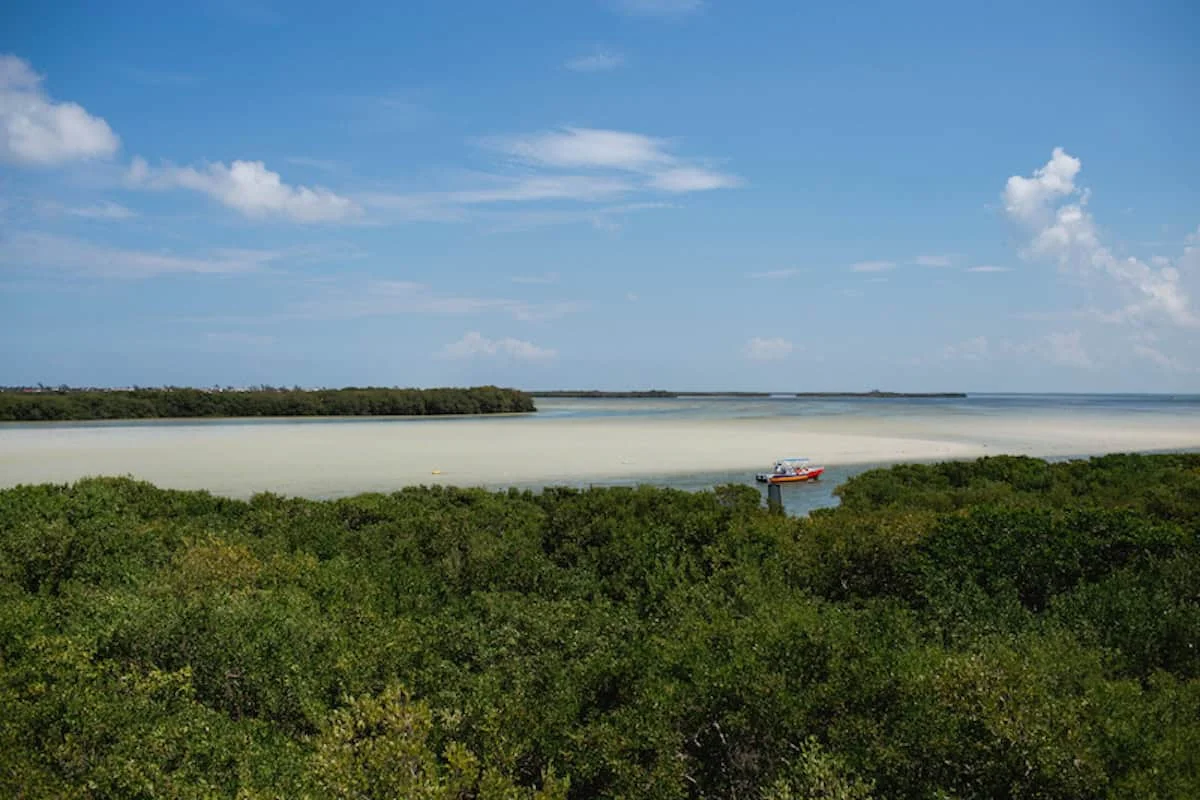
Holbox is a long, low island on the northern tip of the Yucatán Peninsula, in the state of Quintana Roo. It sits inside the Yum Balam Nature Reserve, which explains a lot: shallow pale water, mangroves, very little construction, and a town you can cross on foot or by bicycle in an hour. The climate is humid tropical, the same as the rest of the peninsula, so there is a version of this island you can enjoy almost any week of the year. There is also a version of it where the roads wash out and the shops close. The difference is the month you pick.
How to read Holbox’s calendar
The island has two real seasons, and the split is useful:
The dry season runs from December to April. Skies are mostly clear, rain is rare, and the humidity sits lower. This is when the island makes its money, and when the prices match.
The wet season runs from June to October. Rain comes in heavier spells, storms show up occasionally, and the air gets thick. You will still get sunny days inside it. What changes is the rhythm of the island: some businesses slow down, some close for the season, and the crowds thin out until the place feels like a different town.
There are no fixed fares or rates worth quoting on the island itself, because prices swing with the season in a way that has no floor. What I can say, from what I’ve actually paid in each period: everything from the room to the tour to the fish taco is cheapest in the wet months and most expensive in the dry ones. No numbers to give you, just the direction.
What each month actually does
I pulled the monthly ranges from the climate calendars people use for the region, and condensed them here rather than writing twelve sections of the same sentence:
| Month | Temperature range | Rain / notes |
|---|---|---|
| January | 55°F to 86°F (13°C to 30°C) | Dry, clear, the coldest month and the busiest |
| February | 57°F to 86°F (14°C to 30°C) | Dry; second half of the month noticeably warmer |
| March | 59°F to 90°F (15°C to 32°C) | Still dry; high season winding down, better deals by month’s end |
| April | 70°F to 93°F (21°C to 34°C) | Transition month; last stretch before the heat and humidity set in |
| May | 74°F to 93°F (23°C to 34°C) | Low season begins; seaweed (sargazo) starts washing up on beaches |
| June | 74°F to 93°F (23°C to 34°C) | Rainy season starts; showers mostly in the afternoon |
| July | 74°F to 93°F (23°C to 34°C) | More occasional rain than continuous; peak whale shark season |
| August | 75°F to 93°F (24°C to 34°C) | Sticky; hottest month; hurricane season kicks off at month’s end |
| September | 73°F to 91°F (23°C to 33°C) | First hurricane month; about 31 inches of rain on average |
| October | 66°F to 90°F (19°C to 32°C) | Rainiest month, about 48 inches; many places close down |
| November | 68°F to 88°F (20°C to 31°C) | Rain eases off (about 26 inches); more sun, tourism starting again |
| December | 64°F to 88°F (18°C to 31°C) | Dry and sunny; busy winter season begins |
Two things jump out. January through March is genuinely the window for the classic sunny beach trip, and it is the window when you pay for it. September and October are the window when you should have a plan for what to do if the weather eats a day, because it will eat one.
The months I’d actually book
December through March. The weather is close to perfect, the rain chance is minimal, and the island is in full working order: tours running, restaurants open, the beach clubs doing their thing. The trade is the price, and the crowds, especially around Christmas and New Year, when the town fills with people escaping cold winters and the music plays late. If you are coming for quiet, those holiday weeks are not it.
May, if you can take the heat. The winter crowds have burned off because it gets hot and humid, and the prices drop with the crowds. The catch: it is the beginning of the seaweed season, and in recent years sargassum has started showing up on the beaches after a few years of Holbox escaping it. Check recent photos of the beach you’re staying near before you book, not after.
November, which I would argue is the best month on this island. It is a shoulder month after the hurricane season: the weather is still pleasant, the rain has mostly stopped, and you can get dry-season conditions at pre-winter prices. I have visited in November more than once, and it is the version of Holbox where nothing is broken and nothing is packed.
When to skip it
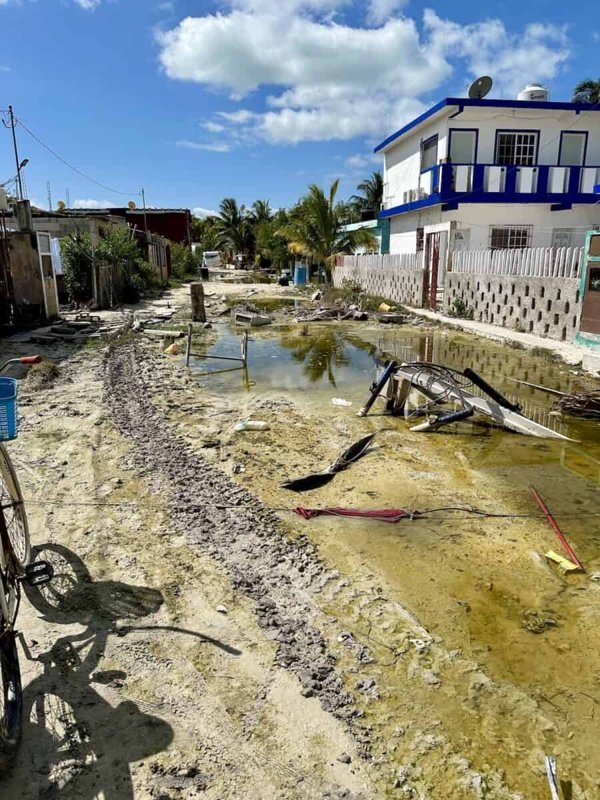
October. It is the wettest month on the island at about 48 inches of precipitation, and the practical consequence is that a lot of places simply close because there is not enough business to keep them open. September is the other month to handle with care: it is the first hurricane month, and the island’s dirt roads get washed out in the heavy rains, which makes getting around a muddy negotiation. If a hurricane actually moves through, you could be waiting a couple of days for it to pass, and that is hard to plan around when your time on the island is limited.
Also skip the big holiday weeks if quiet is the point you’re trying to get. Christmas, New Year’s, and Easter are loud on Holbox, and the town is at full capacity.
Whale sharks change the answer
The one reason to visit outside the sunny window is the whale sharks. Their season runs from mid-May to mid-September, with occasional sightings in May and the real peak in July and August, when the adults migrate through to feed on plankton. They get big: up to 41,000 pounds and 33 feet long, and they are protected by law, so a decent operator keeps distance. Read reviews carefully and be suspicious of any company promising you a close encounter or guaranteeing a sighting. No one can guarantee one.
Sea turtle nesting runs from May to September, with the heaviest nesting activity in June and July. If that is what you’re after, the wet season is not a compromise, it is the point.
What the rain actually does to your day
June through early August, the rain is more sporadic than constant and it tends to come in the afternoon. You can do the morning properly and sit out the afternoon. September and October are different, as above.
On the wet side, the lower prices extend beyond the room rate. Tours, activities, even street food come down a bit, and vendors are more willing to haggle a little in the thin months, which is worth remembering but also worth not overdoing. Wildlife shows up more easily when the island is quieter, and the beaches have fewer people on them.
On the dry side, you have more to choose from, and the atmosphere is livelier, which helps if you want the beach club scene and the live music the bars run. The cost is that animals move away from the busy parts of town and deeper into the Yum Balam Reserve when the island is full, so spotting them is harder in the high season.
If you can’t get to the beach, go to the mainland
When the weather on Holbox is not cooperating, the Yucatán is close enough that the rain becomes an excuse to go somewhere else rather than a reason to cancel. Valladolid is a designated Pueblo Mágico, known for its cenotes and its pastel-colored architecture, and it is the usual gateway to Chichen Itza, so the two fit into one trip without much waste. Merida is the cultural center of the peninsula and the second-largest city in the region after Cancun; the ornate central plaza, the museums, and the craft galleries are all there if you want a proper day away from the sand. For local crafts, the Casa de las Artesanias de Yucatan in Merida is the place to buy things made by Indigenous artisans from across Mexico, including the Yucatán itself.
Things worth doing in the wet months
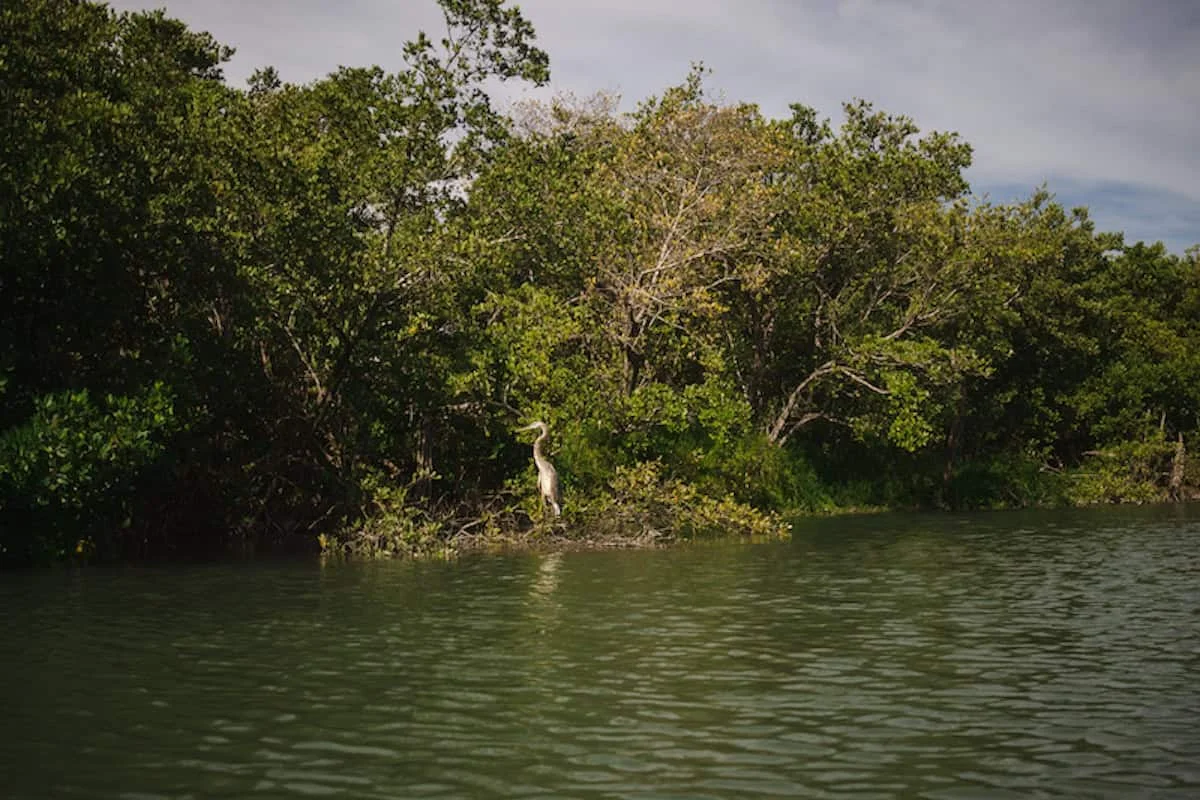
Swimming with the whale sharks in July and August, as above. The mangrove kayaking in the Yum Balam Reserve works in either season; I did it and the crocodiles, flamingos, and the other birds along the water do not care what the sky is doing. The island has a genuine restaurant scene, from the trendy end to the local end, and I have a standing habit of finding the best fish taco on the island during a stay; Barba Negra is the one I keep coming back to. There are cooking classes in town, live music in the bars on most nights, and a wellness scene that includes yoga on the beach and salsa classes if you want to be bad at something in public. A day at the Refugio Holbox animal sanctuary, the local rescue center, is worth the detour in any month.
Getting there, and what it costs in time
The standard route is by road and then by boat: from Cancun it is roughly a two-hour drive to the town of Chiquilá, and the channel between Chiquilá and Holbox is crossed by ferry in about 20 to 30 minutes. The ADO bus to Chiquilá is bookable through BusBud, and shared or private shuttles run as well; the taxi is faster and more expensive than it should be, which is the usual story. There is also a flight from Cancun International Airport (CUN) to Holbox Airport (HOL), which trades money for time and saves you hours on the road. If you have the full five days on the island, the slow route is not a waste of any of them; if your window is shorter, the flight earns its price.
One practical note: Quintana Roo does not observe daylight saving time, so if you are coming from a country that does, your phone will be lying to you for part of the year.
If you only have a few days, skip this and do that
If you have a short window and the weather is good, skip the mainland detours and spend all of it on the island: a morning in the Yum Balam mangroves, the classic three-island tour that visits Yalahau Cenote, Punta Mosquito, and Isla Pasion (or Isla Pajaros at certain times of year), and a night walk at Playa Punta Cocos or Playa Holbox for the bioluminescence, which is strongest in summer and on a dark, moonless night. If the weather is bad and you have the days for it, skip the beach entirely and take the bus to Valladolid, because a rainy day in a Pueblo Mágico is still a day well spent.
What I’d do differently
I’ve planned trips to Holbox around the wrong month more than once, usually by defaulting to the sunny season without checking what I actually wanted to do there. The fix is to decide the activity first and the month second: if it is the whale sharks, July; if it is the quiet and the prices, November; if it is the beach at its best, December through March with your eyes open about the holiday crowds. September and October I would leave to people who have a lot of days and a low opinion of rain, and I would check the forecast the week before I go, whichever month I pick.