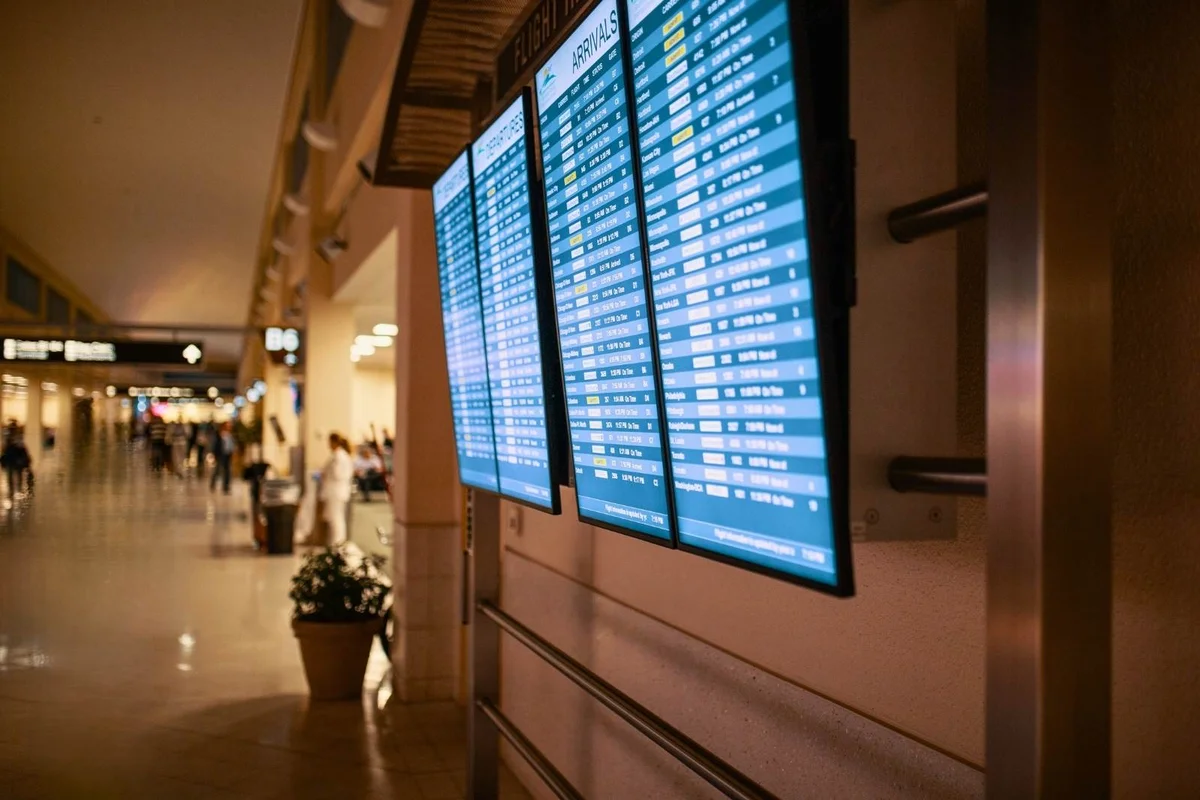
I was at the departure board in Vienna on a Friday, watching the the 7:10 to Munich flip from Boarding to Delayed, and thinking about how the ticket I had bought for it had cost $25 more than the one next to it on the same screen. The board does not care what you paid. That is the first lesson in airline booking traps: the number you see on the first search screen is a promise, not a price.
The second lesson is what that number becomes. A flight that looks like it costs $400 is very easy to watch turn into $650 once the carry-on, the seat, and the final checkout screens have all had their say. I have watched that happen on a single booking more than once, and I still slow down before pressing confirm, the way you double-check a train fare at the counter before you realize you are holding the wrong ticket.
Why the lowest fare on screen is not the price of the journey
Booking sites are not usually badly designed. They are doing what they were built to do: put the lowest advertised fare in front of you first, and reveal the cost of everything else one screen at a time. The fare, the bag, the seat, the rules, the connection, the airline that actually flies the plane. Each one shows up after you have already fallen in love with the price.
So the comparison that matters is not between two base fares. It is between two complete journeys: the baggage included, the restrictions in writing, the operating carrier named, the connection protected, and the total you would actually pay. The traps below are the twelve places where I have seen that total quietly balloon, and the check I run for each one before I book.
The twelve airline booking traps, and the check for each
1. Choosing a flight because of the airline logo. You see the carrier you always use, remember the points sitting in the account, and stop comparing. Loyalty is one line in the calculation, not the first line. Before you pick an airline, compare the carry-on and checked allowances, seat-selection costs, cancellation rules, connection length, times, the operating carrier, and the final price after the extras you actually need. The days of automatically paying more because it is your airline should be over.
2. Buying basic economy without doing the math. Basic economy is a perfectly fair fare for a short flight, one small personal item, and plans that will not change. The trap is that the lowest fare appears first, so you buy the number instead of reading what was removed. I have saved $40 on a ticket and spent $85 adding the carry-on bag I needed from the start. Price the next fare category before you decide. A standard economy ticket may cost more on the screen but include the bag, the seat selection, and the flexibility. Do not buy the lowest number. Buy the fare that includes what you actually need.
3. Paying more after a fare-bucket jump. Airlines do not sell every economy seat at the same price. Seats are divided into pricing tiers, and when the cheapest tier sells out, the price can jump even with the aircraft half empty. That is why a flight can sit at $480 in the morning and $620 later the same day. The plane did not suddenly fill up; the cheapest fare class just disappeared. When the price jumps, reopen the comparison: other airlines, earlier or later departures, nearby dates, nearby airports, the next fare level. The next level may include the bag and the flexibility, and be better value than the stripped ticket you were about to buy. A fare jump is a signal to widen the search, not to accept the new number.
4. Assuming the round trip is always the best deal. The standard search box hands you a departure city, a destination, and two dates. That does not make the round trip the cheapest way to book an expensive international itinerary. Compare it three ways: one round-trip ticket, two separate one-ways, and a multi-city or open-jaw ticket. An open jaw means flying into one city and coming home from another. Fly into Paris, return from Rome, and you may save a train or a flight back, a hotel night, and a whole day of backtracking. Different carriers can even work in each direction, if the best outbound and the best return live with two airlines. Just check the baggage fees, restrictions, and cancellation terms on any split tickets first.
5. Not checking the operating airline. On a codeshare, the airline selling the ticket may not be the airline flying the plane. You buy through one website and arrive at the airport to find a partner carrier running the flight. That changes online check-in, seat selection, the aircraft type, the cabin layout, baggage handling, the terminal, and who actually helps when something goes wrong. Look for the words operated by in the flight details, then check the itinerary on both airlines’ websites and confirm the operating carrier’s own reservation number. The confirmation issued by the selling airline may not work on the partner’s site. The most expensive sentence in travel can be you need to contact the other airline.
6. Accidentally booking a mixed-cabin ticket. The search result can carry a big premium economy or business label, and the whole journey looks upgraded. Then you expand the details and find the 40-minute connection in premium economy while the eight-hour overnight flight is regular economy. I have come close to booking exactly this. Check the cabin listed beside every individual segment, and make sure the premium seat is on the flight where it matters. Mixed cabins also change lounge access, priority check-in, boarding groups, baggage allowances, mileage earnings, and what happens in a disruption. Screenshot the cabin shown for each flight and confirm it in the final reservation.
7. Checking the wrong baggage rules. There is rarely one simple baggage policy per airline. The allowance depends on the exact fare, the route, the destination, the operating carrier, your status, whether everything is on one ticket, and whether a segment is flown by a low-cost carrier. Do not read only the general baggage page; open the conditions attached to the specific fare and route you are considering. Confirm the personal-item dimensions, the carry-on dimensions and weight, the checked allowance and weight, the oversize charges, and the difference between paying online and at the airport. This matters most when a long-haul connection lands you on a small carrier inside Europe: a bag accepted on the first flight can be too large, too heavy, or simply not included on the next one. And the bag that fits in the overhead bin is measured with the wheels and the handles, not without them. Price the luggage before you buy the flight, and weigh the suitcase at home on a real scale. Saying it feels about 20 pounds (or kilograms, depending on where you live) is not a baggage strategy.
8. Booking an unprotected self-transfer. This is the one I treat as the most expensive mistake in the list. Some search sites combine two separate tickets and show them as one journey, with small warnings about self-transfers, separate tickets, collecting and re-checking bags, or a transfer that is not protected. The catch: the airlines may not recognize the flights as one itinerary. If the first flight is late, the second airline can treat you as a no-show, and you lose the rest of that reservation and buy a last-minute ticket. The first airline has delivered you to the destination written on its ticket and may feel no further responsibility. A self-transfer can also mean clearing immigration, collecting bags, leaving the secure area, changing terminals, going to another airport, checking in again, and beating a new baggage-drop deadline. It can work with a long buffer, carry-on only, and an airport you know. I would not use one when connecting to a cruise, a wedding, a tour, or a once-daily long-haul flight. Compare the self-transfer price against a protected itinerary. The higher fare may be buying the airline’s responsibility to get you to your final destination.
9. Confusing the minimum connection time with a realistic one. An airline can sell you a connection that technically meets the airport’s minimum. At a large international airport, a 45-minute connection can mean a long walk, a terminal change, passport control, extra security, a bus, a slow deplaning, and a late inbound flight. If the connection makes you nervous at home, it will not feel better when you are waiting at the gate. Allow more time when you are connecting to a cruise, the last flight of the day, a once-daily route, or when you are clearing immigration or changing terminals. A missed connection can cost a full day.
10. Buying through a third-party site without comparing directly. I use third-party flight sites for research, and they are good at comparing airlines, dates, and routings. Buying through one is a separate decision. A third-party fare can be genuinely cheaper, but make sure you are comparing the same product: not a more restrictive fare, not excluded baggage, not separate tickets, not a self-transfer, not extra service fees. The trouble usually shows up when the schedule changes or the flight is cancelled. The airline says to call the site that issued the ticket; the site says only the airline can fix the flight. If the price difference is small, the airline’s own site is often worth it for the simpler phone call. Check the payment currency too: some sites offer to convert the total into your home currency at a rate that is not as favorable as your card’s.
11. Assuming a valid passport is all you need. Some of the most expensive travel problems happen after the hotel, the tour, or the cruise is already paid for. A valid passport may not be enough to enter a destination or to transit through a connecting country, depending on your nationality and route. You may need a visa, an electronic travel authorization, a transit visa, proof of onward travel, proof of accommodation, or a passport with several months of remaining validity. And the name on the ticket has to match the passport and any visa exactly; a nickname will not do. Five minutes at home to check entry requirements, passport validity, transit rules at every connecting airport, and the names and dates on every document can save the whole trip at the airport. Check your own country’s official travel advisories and the relevant embassy or immigration authority for the current rules, because they change.
12. Planning around departure time instead of boarding time. The departure time is when the aircraft is scheduled to leave. It is not when you should be at the gate. Boarding starts earlier, the gate closes before departure, and the exact cutoff depends on the airport, the airline, and the route. If you miss the flight, the cost goes well beyond a replacement ticket: a prepaid hotel night, a connecting flight, a non-refundable tour, a rental car, a cruise departure. Build your schedule backward from the check-in, baggage-drop, boarding, and gate-closing deadlines, and add time for parking, the shuttle, security, passport control, and finding the gate. Extra time at the gate beats your name being called over the loudspeaker while you run.
If you only have ten minutes before you press confirm
Skip the flight-hacking articles and run the checklist instead. Is this the best fare, or just the airline I normally use? What exactly does this fare include? What will the bags cost? Do I actually need seat selection? Which carrier operates each segment? Is every long flight in the cabin I meant to buy? Are all the flights on one protected ticket? Are the connection times realistic? Would one-way or multi-city pricing work better? Is the third-party price still cheaper after the fees? Do the names match the passports? Have I checked entry and transit requirements? The best defence against airline booking traps is not a secret search setting. It is slowing down long enough to compare the complete journey.
What I would do differently next time
Every trap on that list works best while you are rushing. You see a low fare, get excited, and want to finish before the number changes. Then the booking process shows you the bags, the seats, the restrictions, and the connections after you have already emotionally committed to the flight. I have been on the wrong side of that at least twice, and the second time it cost more than the first.
The cheapest flight is not the one with the lowest number on the first screen. It is the one that gets you to your destination without surprise charges, an unrealistic connection, or an expensive problem at the airport. Experience has not made me immune to booking mistakes. It has only taught me when to stop, reopen the details, and check one more time. Take five minutes before you press confirm. Those five minutes can save hundreds of dollars, or save the entire trip.