
The last train out of Málaga ran at 23:40, and the platform clock was wrong by the usual four minutes. I had it on my paper map that if I missed it, the next one wouldn’t come until morning, and I was standing there with one suitcase and a half-finished bottle of water, deciding how badly I wanted to be wrong. That’s the kind of decision Spain’s coastlines keep making for you. The mainland and the islands run from idyllic Mediterranean coves to urban beaches facing culinary capitals to Atlantic surf hubs, and almost every kind of summer has a shore that suits it.
I’m not going to promise you Benidorm or Magaluf. I’ve been to both and I’d rather be wrong. What follows are five beach destinations in Spain I’d actually travel to the slow way, one by one, with what each one is really for and what it’s not for.
Canary Islands: volcanic sand that stays warm all winter
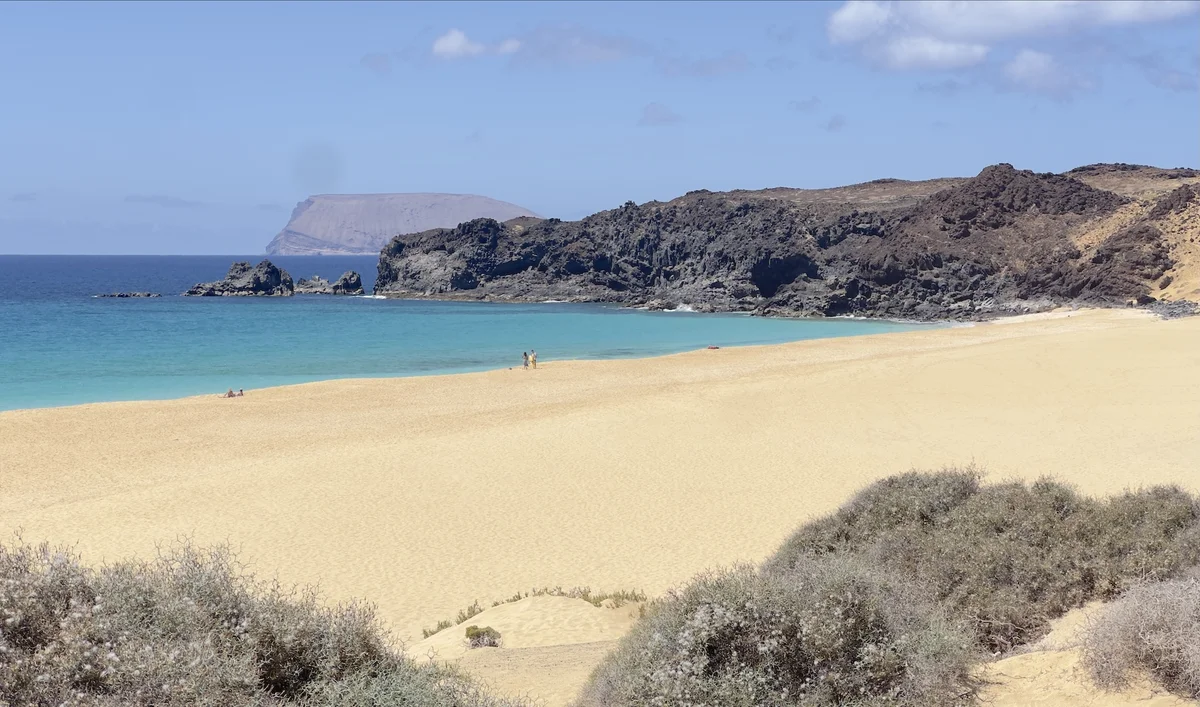
The eight main Canary Islands sit closer to Western Sahara than to the mainland, and that shows in the weather. It’s one of Spain’s hottest coastal destinations in summer, but an Atlantic breeze keeps it from turning into an oven. I spent a week between Lanzarote and Fuerteventura last year and the honest version is this: the beaches are first-class, and the traffic around them is first-class too.
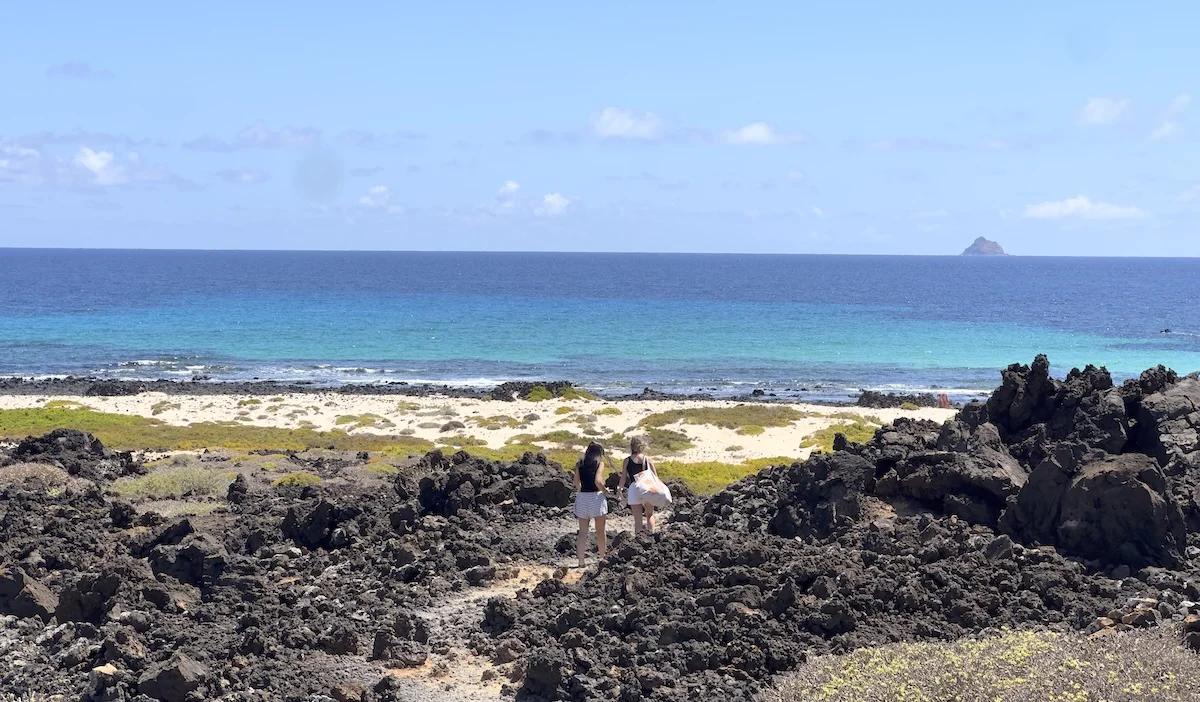
In Lanzarote the volcanic remains meet golden sand, and the contrast is the point. Hike in the national park, or cross over to Gran Canaria and walk up to Roque Nublo. On Fuerteventura the water in the bays is close enough to crystal that you can count the bottom from the shallows, and I saw dolphins from the shore on a calm afternoon, which I’m still not entirely sure was real. Playa de Cofete is the one to plan around. It’s long, it’s remote, and it takes some walking to reach, so most people are already gone by the time you arrive.
If you’re travelling with kids, the sheltered bays like Playa de Amadores are the practical choice. Calm water, sand you can run on, and none of the dune-walking.
Where to stay: I stayed at a family-run property in the Canary Islands that has been in the same family for nearly 75 years, part of a small group of hotels spread across four of the islands. I’d choose it over the international chains and the tourism rentals, which are causing a lot of local resentment. They offer all-inclusive day passes, so even if you’re staying elsewhere you can spend a day on the premises and decide if the resort life is for you. Prices vary by season, so check before you book.
San Sebastián: a bay where the whole town eats standing up
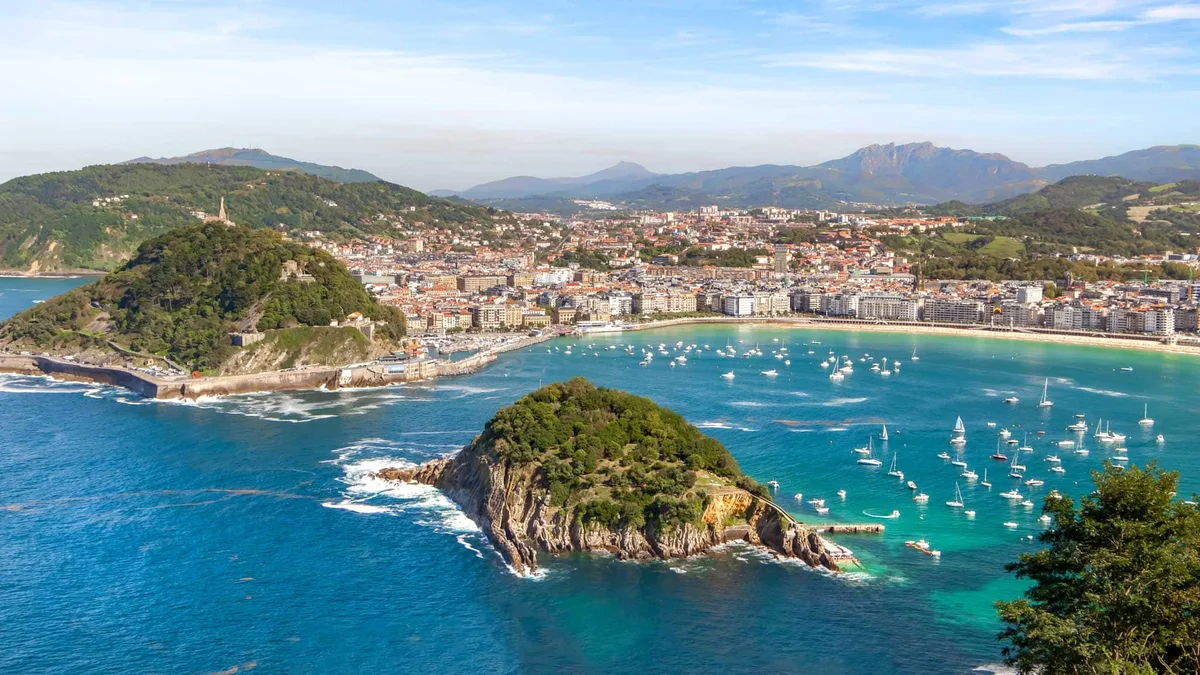
When southern Spain sizzles, the north coast is in its comfortable but sunny element. San Sebastián sits on the Bay of Biscay a short hop from the French border, and it’s the Basque Country’s culinary capital for a reason that takes one evening to understand. Pintxos, the small paid-for tapas that top every bar counter in the city, are the whole point. You stand at the bar, you order a plate or three, you drink something small, you move on. I did this until my feet ached and I was still not full enough to call it a night.
The beach side of things is two sandy bays flanking the historic centre, La Concha and Zurriola. Both are close enough that you don’t need a plan to get from a pintxo bar to a swim. The promenade around La Concha is a proper walk, not a jog, and the view of the rocky outcrops in the bay is better from the water than from the top.
If you’re coming from the UK or Ireland, the overnight ferry is the slow-travel option, and the flight to Bilbao is roughly half the length of the flight to the Canary Islands. A long weekend covers it, because everything is compact and within walking distance of the bays.
Costa Brava: villages you can only reach by road
The Costa Brava runs from Blanes in Catalonia along to the French border, and it’s long been the default choice for a fly-and-flop week. But it’s also where Salvador Dalí was born, and the coast is threaded with natural parks, wineries and villages that a train never quite reaches.
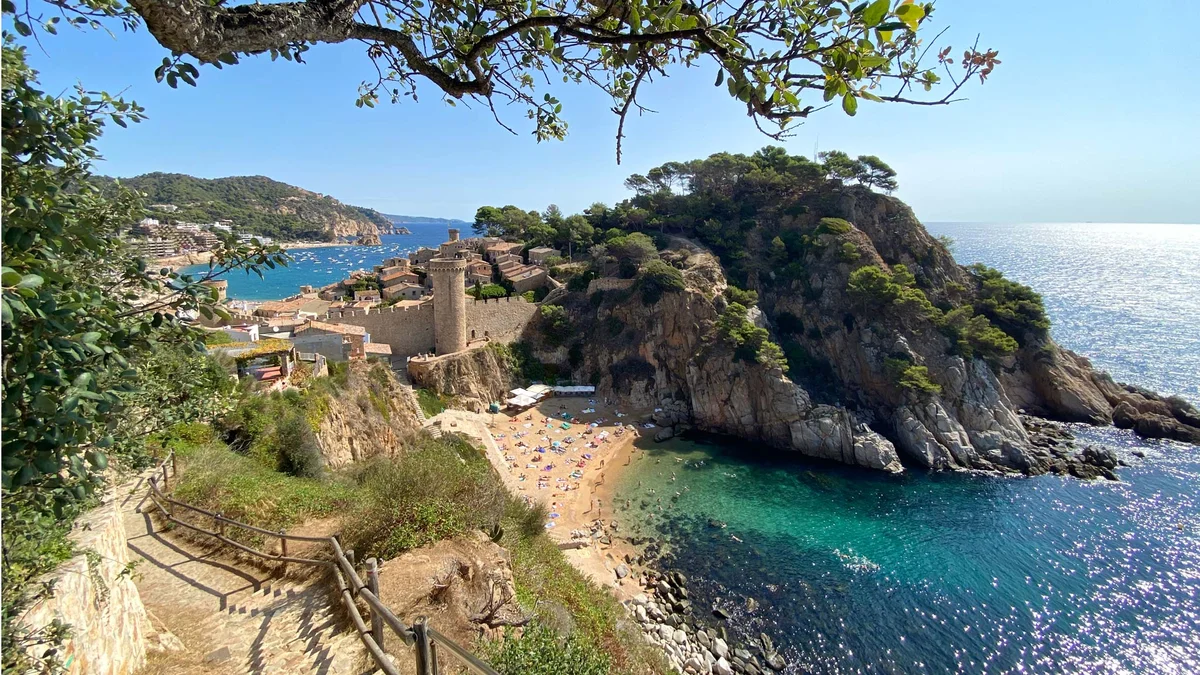
Tossa de Mar is the one I’d pick. The medieval Vila Vella fortress sits on the headland and the Sa Roqueta fishing neighbourhood is still a fishing neighbourhood, not a resort. A short drive further, Palafrugell has a beach with water that turns genuinely turquoise on a clear day, which I’m telling you with the modesty of someone who has seen the photos and then gone to check.
The beaches themselves are plentiful and varied. The bay in front of Roses is wide and shallow, and the urban beaches around Lloret de Mar are fine for a day. But the reason to rent a car for this stretch is the 200 kilometres of coastline between them. Cala Jugadora is a pebbly cove you can reach on foot. Platja de Castell is golden sand backed by vegetation. Both are quiet on a weekday morning, which is when most people are still deciding what to have for breakfast.
Girona has the nearest airport. If you’re already in Barcelona, the drive to Tossa de Mar is under 90 minutes, which is short enough that you don’t need to justify the detour.
Tarifa: where the Atlantic and the Mediterranean meet
Tarifa is at Spain’s southern tip, surveying the Strait of Gibraltar. Punta de Tarifa is the point where the Atlantic and the Mediterranean collide, and you can see the colour change in the water with your own eyes, which is either a nice fact or a weird one depending on your day. Either way it makes the town feel a world away from Seville, and further from Cadiz than you’d think.
The beaches here are wide, sandy, and backed by wild dunes. The surf schools are plentiful and the waves are forgiving, which is what makes it a good place to learn. Kitesurfing and windsurfing are the stronger disciplines though, and the wind is consistent enough that the shops rent gear most days of the week. The town itself fizzes out in both directions along the shore, so a beach bar is never far away, and there are no high-rises anywhere you can see.
The ferry to Tangier runs from the central port and passport control is done on the boat. I took it for a day trip and came back the same evening. If you want to do it properly, a twin-country and twin-continent beach holiday is the better plan. I’ve written about the ferry route in more detail here, but the short version is that it’s straightforward and the view across the strait is worth the ticket.
Costa Verde: the green coast where the weather stays reasonable
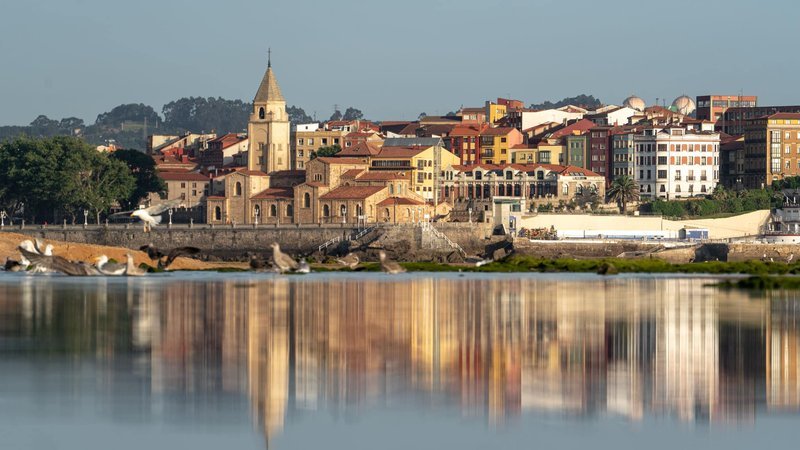
Northern Spain holds its own in summer, and the Costa Verde is the stretch I’d pick over the Mediterranean if the heat is the thing you’re trying to avoid. Verdant hills and lofty peaks sit just behind the beaches, and the Cantabrian Sea is colder than it looks, which is a good thing for a swim in July. The name covers Asturias most directly, but the shores in neighbouring Galicia and Cantabria are often counted in too.
Cudillero is the postcard version of a small northern fishing village, and it delivers. Playa de Gerra near Santander is longer and wider. Gijón is the city option, Art Nouveau buildings and urban beaches, and it’s close enough that you don’t have to give up the town to get a sandy spot. The further west you go the more wind-weathered the coast becomes. Cabo Fisterra at the far end is dramatic in a way that’s hard to photograph, and Playa de Langosteira is a white sand beach sheltered enough to actually swim on a summer’s day.
With the summer temperatures in the north being pleasant and not too hot, the inland detours are worth taking. Oviedo is one of Spain’s prettiest and cleanest cities, and the Picos de Europa National Park is the right place to combine a day of hiking with an afternoon on the sand.
If you only have one long weekend, skip the islands and do San Sebastián
The trade-off, stated plainly. If you’ve got four or five days and you want the full range of coastlines, the Canaries plus a northern coast is the best combination. But if you’ve got a long weekend and you’re choosing between the islands and the mainland, choose San Sebastián. Everything is within walking distance of the bays, the food is the reason you came in the first place, and the weather in late summer is better than anything on the south coast. Skip the Canaries, skip the road trip on the Costa Brava, and put your feet up in La Concha instead. You’ll want to come back for the rest of it, but you’ll want it more if you’ve only had a taste.
Prices across all five of these vary more than I’d like to write down in a single post. The Canary Islands are the most expensive of the lot in summer, the Costa Verde is the cheapest, and everything in between is what you’d expect for a Spanish coast. Book early, check the ferry times, and don’t trust the platform clock.