Category: Food Travel

  • The Ceviche That Made Us Book a Trip to Lima — Chez Wong and Chef Javier Wong

    The Ceviche That Made Us Book a Trip to Lima — Chez Wong and Chef Javier Wong

    There are restaurants so good that you plan an entire trip around them. I used to think that was something people said about French bistros or Tokyo counters. Then a friend set up lunch for me at Chez Wong in Lima, and I realized she wasn’t exaggerating when she called it once-in-a-lifetime.

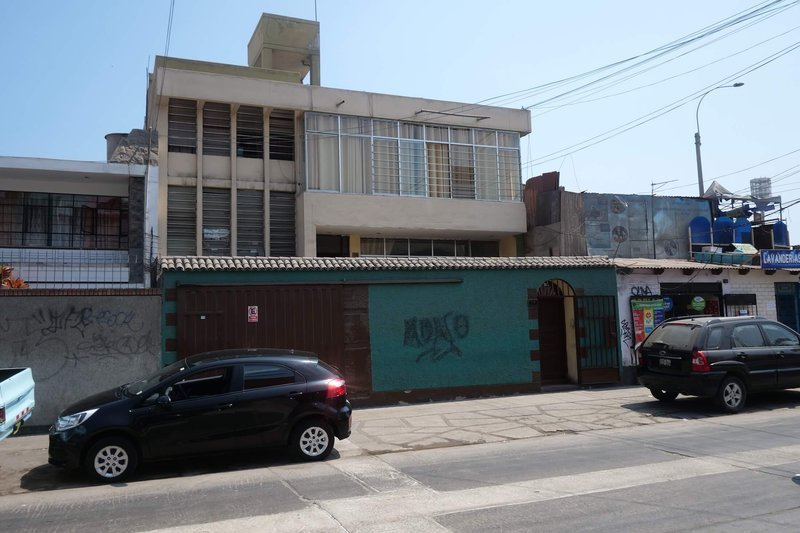
    The place is unassuming from the outside — just a teal wall, a metal gate, parked cars. Nothing on that street corner tells you what waits behind it.
    The Ceviche That Made Us Book a Trip to Lima — Chez Wong and Chef Javier Wong - photo 1

    A man of few words and a very sharp knife

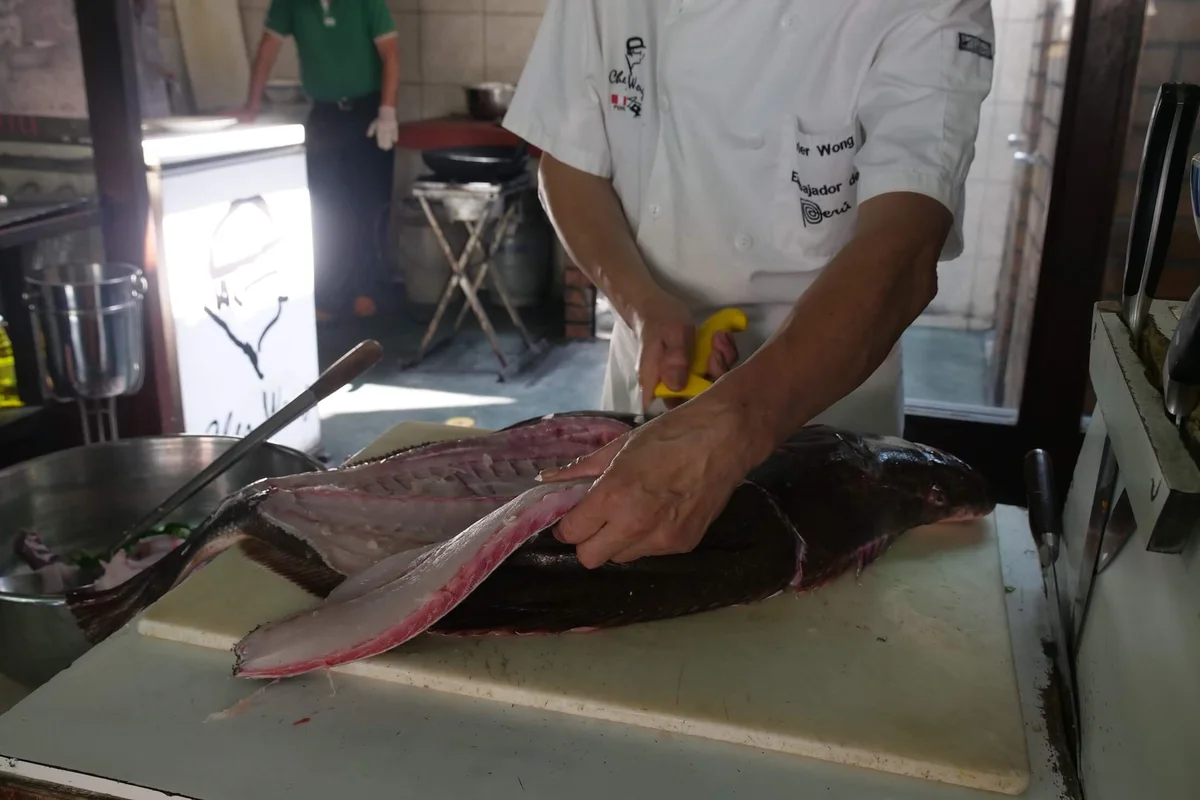
    Javier Wong is the chef, the owner, and honestly the whole reason this place exists. He’s older now, but he moves quickly and with total confidence — no wasted gestures, nothing uncertain about him. Watching him lean down and lift a 10 kg (22 lb) Dover Sole from an ice tray with one hand tells you everything.

    He works right in front of you for nearly an hour before serving a single plate. And that is both thrilling and slightly cruel, because the smells alone could ruin your appetite if you weren’t already committed to the experience.
    The Ceviche That Made Us Book a Trip to Lima — Chez Wong and Chef Javier Wong - photo 2

    Five ingredients. That’s all it takes.

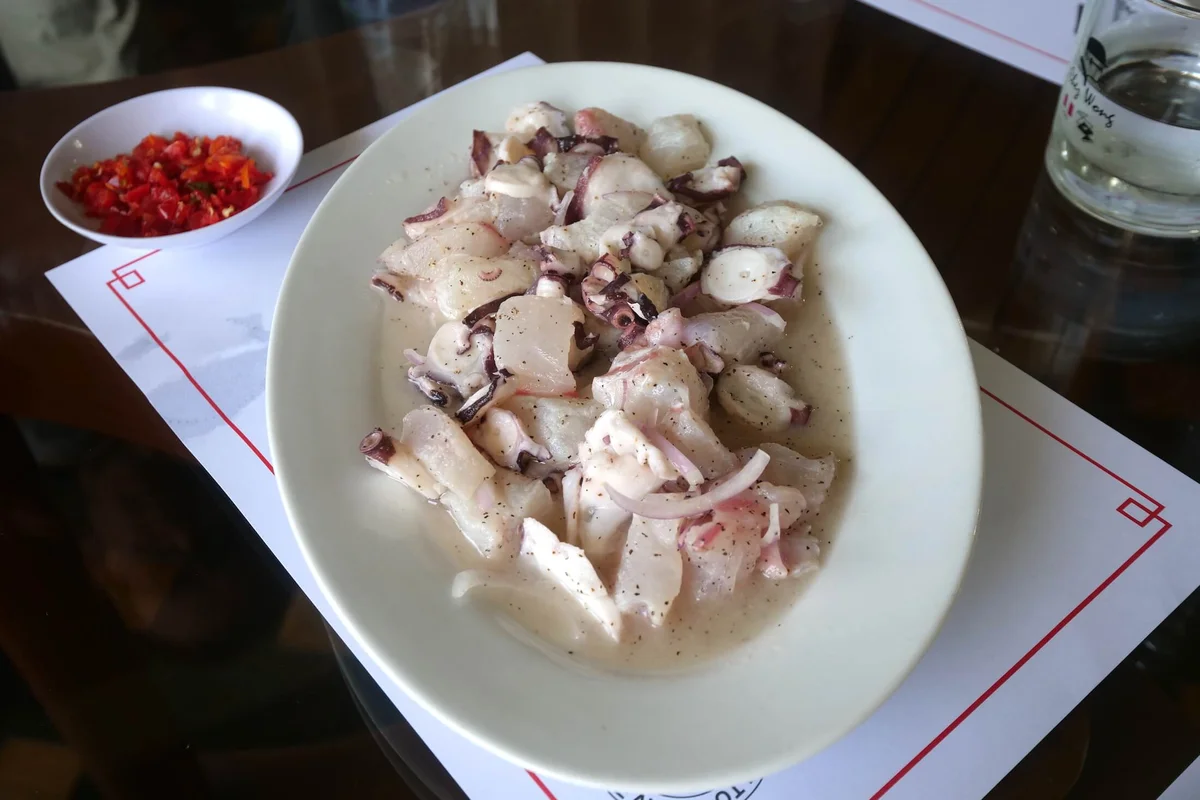
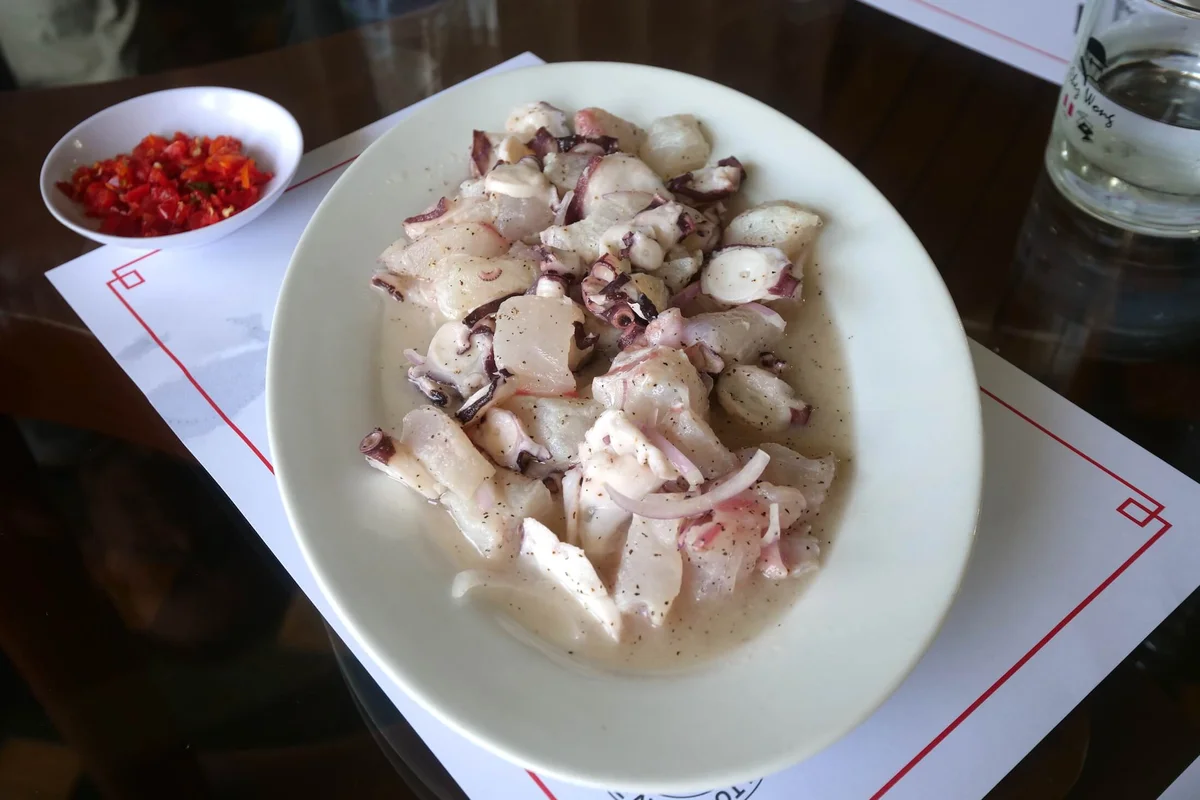
    The first course is ceviche, and what surprised me most was how few things Chef Wong actually uses. Dover Sole fillets cut into generous chunks — not the thin slices you’d get at a street stall — pieces of fresh octopus, lime juice (a lot of it), salt, and just a tiny bit of black pepper.

    Five ingredients. Nothing more than that.
    The Ceviche That Made Us Book a Trip to Lima — Chez Wong and Chef Javier Wong - photo 3

    The simplicity is the point. He lets the quality of each one speak for itself. The fish melts on your tongue; the octopus has this clean, bouncy chew. And the lime juice doesn’t just marinate — it actually changes the texture of the meat, turning those translucent raw edges opaque and bright.

    He keeps about a dozen small dishes of Peruvian Aji peppers around his station, each one paired with a plate. You build your own heat level.

    You don’t order anything here

    There is no menu. You order drinks and sit down. Chef Wong decides what he makes each day, who gets served first, how many courses there are, even the portion sizes. The dining room holds only eight tables, and during our lunch, we simply let him guide us.

    This is why reservations matter so much — he buys exactly the fish he needs for each confirmed party that morning at the market. No extras, no leftovers. We saw a group turned away because they didn’t have one. It’s not unfriendliness; it’s just how the system works.

    The tiger’s milk

    All that lime juice pooling at the bottom of your plate? You drink it. Some places in Peru serve it as a cocktail on its own — they call it leche de tigre, or “tiger’s milk.” At Chez Wong, you just ask and someone brings you a glass.

    I can’t describe it except to say: intense. Sour, meaty, salty, peppery — all amplified beyond what your tongue expects from juice that was marinating fish. It hits hard for a moment, then settles into something almost creamy. The consistency is thick and milky in the best way.

    Fire and tangerine

    The second course completely changes pace. Chef Wong steps behind his wok and what follows looks less like cooking and more like controlled explosions. Flames whoosh to the ceiling — one after another, in rhythm, just using one hand. Everyone else in the room takes a step back. He doesn’t even flinch.

    Here’s the thing that stuck with me: he holds a large metal spoon the whole time but doesn’t actually touch the ingredients until the burner is off. The fish is so delicate that stirring it would ruin those perfect cubes. All he does is let the fire do its work, then ladles everything onto your plate.

    The stir-fry itself was surprisingly simple too — fish, snow peas, chard, bok choy, thick mushrooms, and a ripe tangerine cut into chunks. He throws them all in at once instead of staging them, trusting his years of experience to get the timing right. Soy sauce, but barely — just enough for color.

    The tangerine was the masterful move. Soft citrus flesh alongside chewy mushrooms and crisp chard stalks. Every texture had a job. Every flavor was obvious; nothing was hiding behind anything else.

    How to eat at Chez Wong

    If you’re planning a trip to Lima, here’s what I learned about making it work:

    • Reservations are not optional. The waiting list can be weeks or even months long. Book as early as possible.
    • Hours: Tuesday through Saturday, 1:00 pm to 3:30 pm. Closed Sunday and Monday.
    • Pricing: Our party of four came to 545 Nuevo Soles total (about US$165). That covers both courses with drinks for everyone.
    • Arrive on time. He starts at one, and the whole experience unfolds from there.

    I still think about that lunch sometimes. Not just because the food was extraordinary — though it absolutely was — but because of what watching Javier Wong cook felt like: proof that a lifetime spent doing one thing well turns into something almost quiet in its beauty.

    Maybe that is the real gift of seeking out meals like this. They don’t just feed you. They remind you why you travel in the first place.
    Keep Reading

  • Fish Head Curry at Tugu View Cafe: A Malaysian Lunch Worth the Trip

    Fish Head Curry at Tugu View Cafe: A Malaysian Lunch Worth the Trip

    I have a theory that Malaysia might just hold the most interesting lunch counter on Earth. Between centuries of Indian and Chinese cooking traditions and the incredible variety of local ingredients, every street corner seems to offer something worth stopping for.

    But one dish always pulls me in: fish head curry. It is messy, deeply spiced, and somehow at once comforting and adventurous — everything I want from a great meal.

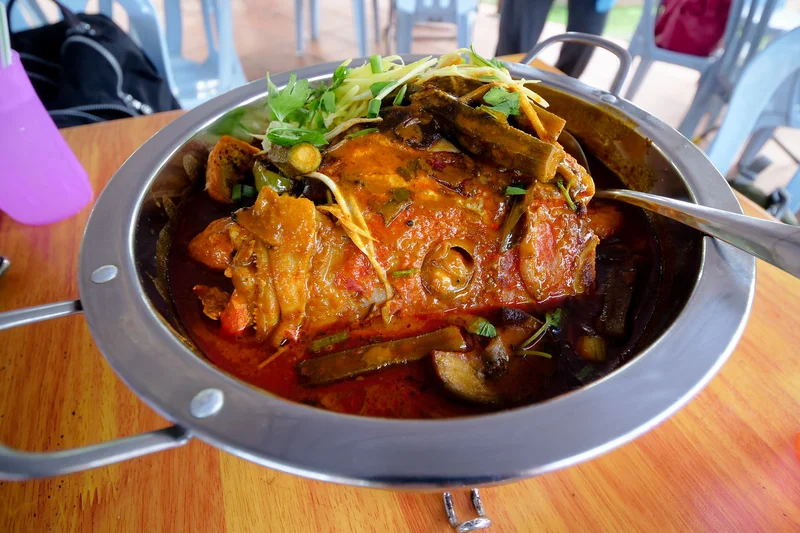
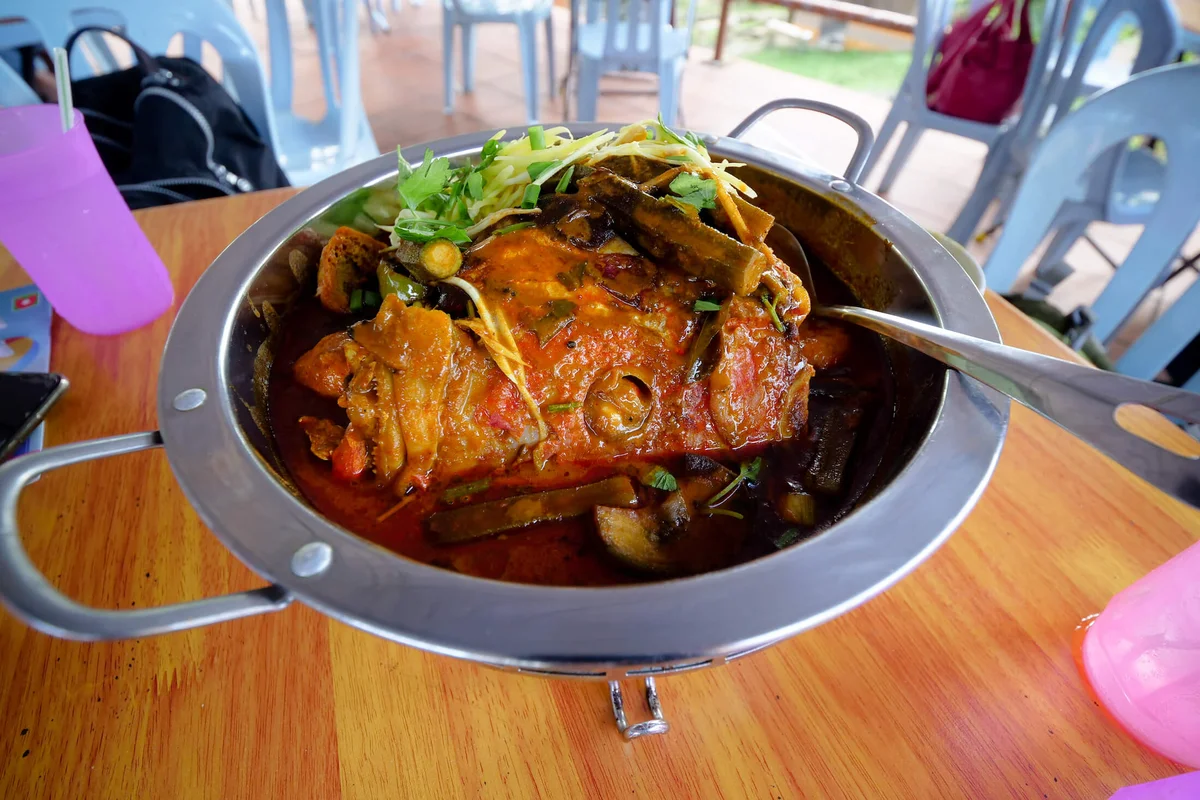
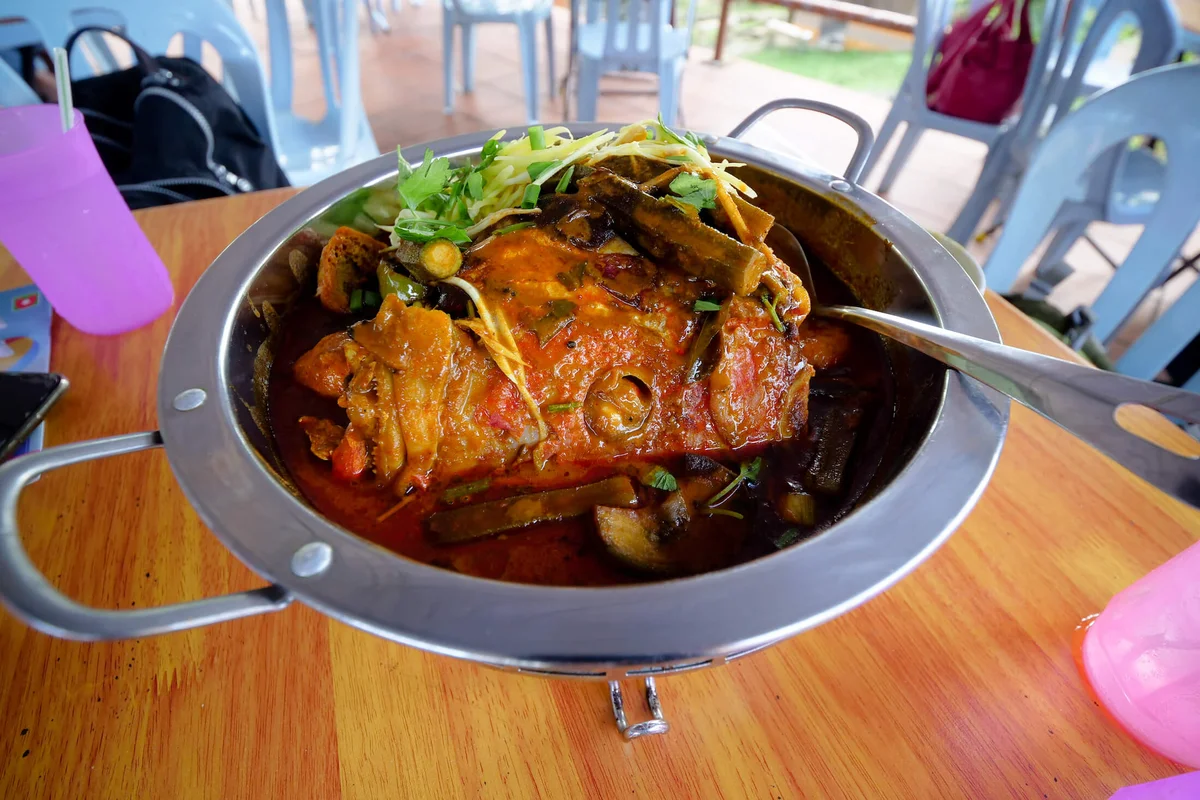
    Whole fish curry in metal pot on wooden table

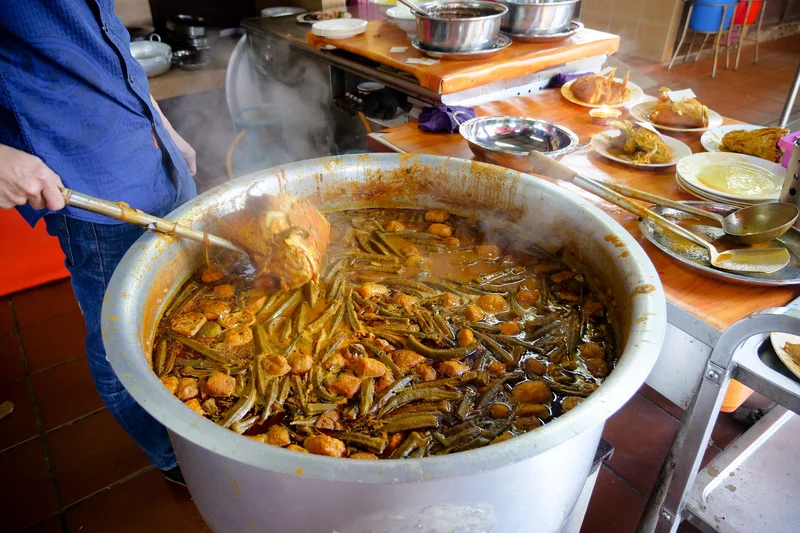
    The nasi campur lunch counter

    Tugu View Cafe in Kuala Lumpur runs what Malaysians call nasi campur — mixed dishes served over rice. It is the ultimate lunchtime format across South East Asia, and for good reason.

    You build your plate from creamy curries, meaty soups, whole fish, and piles of fresh and steamed vegetables. There is never enough room on the plate for everything you want to try. Eating like a local means ladling extra curry sauce over the rice before anything else touches it. When you eat with your fingers, that move makes all the difference.

    It is genuinely delightful when a restaurant does this format well and also has its own signature dish to boot.

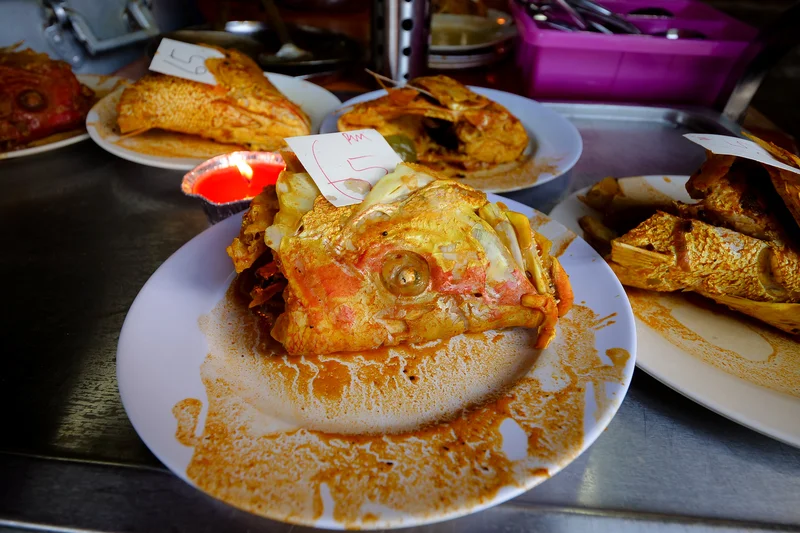
    Cooked fish heads plated with RM 5 price tags

    Why fish head curry?

    The fish heads here come from Red Snapper — Ikan Merah in Malay. It is an ocean fish, and the large meat-filled skull makes it a perfect candidate for slow-cooked curry.

    Steaming curry pot being served at lunch counter

    Think about it: cheeks, eyes, all that tender meat tucked into the head. Pulling soft morsels out of the bone is half the joy of eating this dish. Any fan of fish head curry will tell you the most flavorful bites are always inside the head itself.

    Tugu View Cafe in Kuala Lumpur

    The city has plenty of restaurants serving enormous plates of fish head curry. But Tugu View Cafe stands out — it is genuinely one of the best places to go for this dish (you can see Mark Wiens’ full review in his video).

    Whole Red Snapper in orange-red curry sauce close-up

    On one particularly joyful day in Kuala Lumpur, I ate three different fish head curries back to back. Each one tasted completely different from the last, and that variety alone is worth a trip to the city.

    A practical note on finding the place

    The cafe gets its name from the Tugu Monument, which sits slightly farther down the same hill. It is a well-known Kuala Lumpur landmark — our local friends all visit at some point, though curiously not every taxi driver seems to know it.

    There is a nearby park with a large flower garden and walking areas around the monument itself. The Tugu was built to commemorate Malaysian soldiers during the fight for independence. It feels right that such a glorious dish exists within walking distance of it.

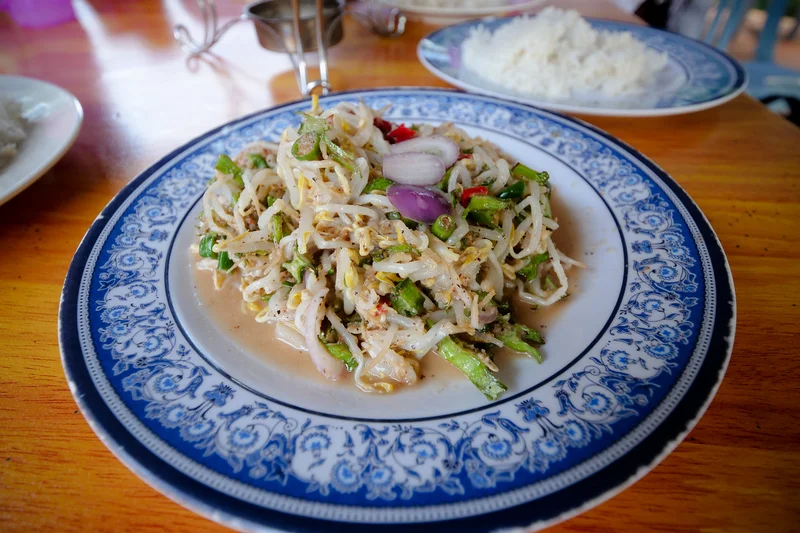
    Thai-style salad on ornate blue-and-white plate with rice

    One heads-up: if you walk over from the gardens, the entrance is not immediately obvious. The closest way in is up several flights of stairs, past a small shop selling ice cream and frozen durian. It looks like the shop blocks the stairs, but it does not — it is just trying to sell treats to tour bus passengers.

    Tugu View Cafe at a glance

    • Name: Tugu View Cafe
    • Location: Google Maps (near the Tugu Monument, Kuala Lumpur)
    • Hours: 7am – 6pm (closed Sunday)
    • Price: Our entire meal came to 144RM (about US$35). A smaller fish head at half that price would be enough for two or three people.

    A plate of Malaysian food has this remarkable ability to both excite and settle you at the same time. The culture is wonderfully laid back, and the food is richly layered without trying too hard. It is almost magical how well it all fits together.

    Tugu View Cafe has a friendly staff and an atmosphere that makes spending an afternoon there feel easy. If you find yourself in Kuala Lumpur, I would say this is one of those meals you should build a day around.


    A note from Nora: The first time I tried fish head curry, I was intimidated by the size of it. Sam laughed and told me to just start at the cheek — and he was right. That bite changed everything. If there is one rule for eating this dish, it is: do not be afraid of the head.

    Keep Reading